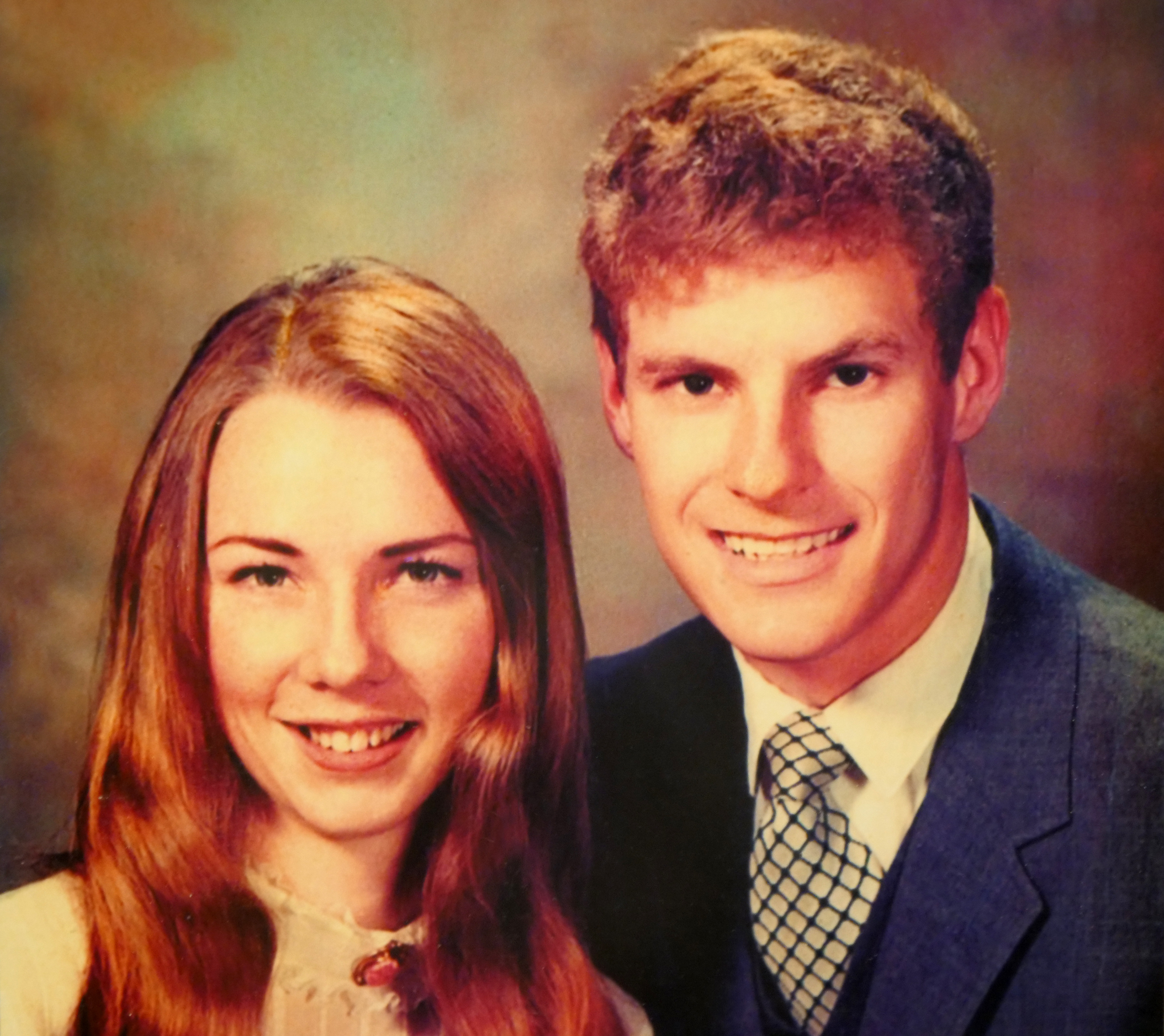
This is a talk I gave in Logandale 6th Ward on 2/19/12
Time: The measured or measurable period during which an action, process, or condition exists or continues
Eternity: A seemingly endless or immeasurable time, infinite time, the quality or state of being eternal.
Eternal: Having infinite duration: everlasting, continued without intermission: perpetual, timeless - Merriam-Webster Dictionary
Illustration of Eternity: Picture a great wall made out of stone, similar to the Great Wall of China. The wall is 100-feet high and 30-feet wide. Every 1000 years two doves fly over it, carrying in their beaks a long silk scarf, one on each end, and they drag it gently over the top of the wall. Eternity is how long it will take for the wall to be ground down and disappear from the abrasion of the silk scarf running across it every millenium.
Time and all Eternity -- We add the word ALL eternity, but by definition, since eternity had no time and no end, eternity is ALL eternity.
The Only Way to Kill Time is to Work It To Death – My Memories of Dr. Franklin Little
It couldn’t have been easy teaching sixteen- and seventeen-year-olds in Sunday School every week, but Dr. Little, a Sacramento dentist, was always there, prepared and enthusiastic. Through his entire teaching one thing was very clear: He cared for us.
He would write a quote that he thought might help us on the chalkboard before each lesson. I’m sure he wondered sometimes if we even remembered them.
After graduating from high school, I was thrilled to land a high-paying summer job to help me save money for my mission. Unfortunately, the thrill wore off all too quickly. The job was at a pallet factory where they took raw lumber and cut it into sizes to make pallets and fruit and vegetable crates. My job was to walk to a pile of boards that had been cut seconds before, visually inspect and grade them, and then walk a few steps and stack them on the A, B, or C tables. Then I returned to the saw and did the same thing all over again—over and over and over, eight hours a day. The day just dragged. I soon found myself counting the minutes until I could take a break or, better yet, stop at the end of the day. I was miserable, but the pay was too great to even consider quitting.
One night as I was praying for help in making it through the next day, one of Dr. Little’s quotes sprang suddenly into my mind: “The only way to kill time is to work it to death.” I wasn’t sure at first how I would apply it, but I decided to put it to the test. The next day I went to work with a mission. I was going to kill time—by working it to death.
What a difference! I found myself trotting back and forth between the tail-off saw and the grading tables. I would set goals like not letting more than three boards stack up before they were on their way to the grading tables. I would concentrate, really concentrate, on making the right decision on the grading—eyeing the cut boards waiting for me as soon as I dropped off the previous ones. And when the whistle announced a break, I was astonished at how quickly the previous couple of hours had gone by, and then the weeks, and soon the summer had flown by, all because of one quote from a wonderful teacher: the only way to kill time is to work it to death.
Recently I was thinking about tedium, about boredom, and it occurred to me that I seldom get bored any more. No matter how repetitious the thing is that I'm doing, no matter how mundane, I usually have enough going on in my mind and in my life that it isn't boring. I rather find myself wishing there was more time. When I go to bed I am sad that I don't have more time to read and write, to video and to volunteer. I catch myself frequently wishing there were more hours in a day. I find myself yearning for the time when there isn't time, when we have all the time we want, when life is literally timeless.
Some scriptures on time:
Psalms 90:4 For a thousand years in thy sight are but as yesterday when it is past, and as a watch in the night.
Eccl 3:1 time to every purpose under the heaven
D&C 88:110 there shall be time no longer
Alma 40:8 all is one day with God, and time only is measured unto men
In a BYU devotional entiled "Patience" Elder Neal A. Maxwell captured the quandary I have -- that I believe we all have -- when it comes to Time:
"When the veil which encloses us is no more, time will also be no more (D&C 84:100). Even now, time is clearly not our natural dimension. Thus it is that we are never really at home in time. Alternately, we find ourselves impatiently wishing to hasten the passage of time or to hold back the dawn. We can do neither, of course. Whereas the bird is at home in the air, we are clearly not at home in time--because we belong to eternity. Time, as much as any one thing, whispers to us that we are strangers here. If time were natural to us, why is it that we have so many clocks and wear wristwatches?
Some of us have been momentarily wrenched by the sound of a train whistle spilling into the night air, and we have been inexplicably subdued by the mix of feelings that this evokes. Or perhaps we have been beckoned by a lighted cottage across a snow-covered meadow at dusk. Or we have heard the warm and drawing laughter of children at a nearby playground. Or we have been tugged at by the strains of congregational singing from a nearby church. Or we have encountered a particular fragrance which has awakened memories deep within us of things which once were. In such moments, we have felt a deep yearning, as if we were temporarily outside of something to which we actually belonged and of which we so much wanted again to be a part.
There are spiritual equivalents of these moments. Such seem to occur most often when time touches eternity. In these moments we feel a longing closeness--but we are still separate. The partition which produces this paradox is something we call the veil--a partition the presence of which requires our patience. We define the veil as the border between mortality and eternity; it is also a film of forgetting which covers the memories of earlier experiences. This forgetfulness will be lifted one day, and on that day we will see forever--rather than "through a glass, darkly" (1 Corinthians 13:12).
There are poignant and frequent reminders of the veil, adding to our sense of being close but still outside. In our deepest prayers, when the agency of man encounters the omniscience of God, we sometimes sense, if only momentarily, how very provincial our petitions are; we perceive that there are more good answers than we have good questions; and we realize that we have been taught more than we can tell, for the language used is not that which the tongue can transmit.
We experience this same close separateness when a baby is born, but also as we wait with those who are dying--for then we brush against the veil, as goodbyes and greetings are said almost within earshot of each other. In such moments, this resonance with realities on the other side of the veil is so obvious that it can be explained in only one way!"
I would like to share some thoughts from one of my favorite wordsmiths, Marvin Payne, from his column "Backstage Graffiti" published in the on-line Meridian Magazine on November 9th, 2011:
"Now think about this for a minute: You are kneeling by your bedside and praying that, say, your wife and/or daughter will last out the night. You expect an answer. You are taught that there will be one. But for an answer to come, a question first has to have been heard. Of course, at this very moment several million Christians and Jews are asking the same Person their own urgent questions, and several million Muslims, depending on the time of day, are vying for His attention, and uncounted believers in God by many other names are doing the same. (Talking this phenomenon over with my frequent director… the legendary Jayne Luke, she said that in her church ((I can’t remember whether it was the Congregationalist or the Universalist Church)) their prayers were addressed “To Whom it may concern.”) Anyhow, that’s a lot of people trying to be heard at once. Some churches have dealt with this apparent impossibility by believing in “celestial call centers” where prayers are heard and mediated by a plethora of saints—still, there just can’t be enough saintly cubicles to make it work.
But, against all logic, you happen to know that Heavenly Father is listening in a personal, focused, undistracted manner to you. Not because it makes sense, not because any dogma contains that preposterous notion, but because you have experienced it. You know exactly how it feels to have the exclusive ear of Deity. To someone who hasn’t experienced it, it’s foolishness. Ask Paul.
A few years ago, Elder Merrill Bateman, as a Seventy, suggested in General Conference that in Gethsemane each of us had some personal interaction with the Savior. That’s more people competing for the Savior’s time than ever prayed all at once, even when BYU is up against the U. No matter how you slice it, the notion of Deity spending quality time with mortals defies logic.
Unless one is lifted above the limitation of time. What if time were merely a convention of mortality? Like water is what fish live in. We don’t live in water, we live above water—but try to explain that to a fish. The brightest among our finny friends wouldn’t be able to imagine living above the limitation of water.
You can read in the scriptures about time ending, about all things being present before the Lord, about Moses seeing everybody and everything all at once. But Moses made a particular point of his being transfigured during the experience.
If time didn’t matter, if time didn’t restrict the Lord (as water restricts fish), it would suddenly be perfectly logical for Him to attend to each of us, alone, for as long as it took to love us, understand us, teach us, and save us. The Savior could walk your whole life with you and with no one else. Without denying the same gift to each of us.
Okay, this is not about trying to explain the miraculous. What we’re about is having faith, repenting, getting baptized, and befriending the Holy Ghost.
Adwen is sleeping soundly. I think I’ll tell the Lord how grateful I am. But I won’t have to take a number."
And thus we face the quandary of mortality: we live in a today, an element that is not natural to us, a period of testing and learning and faith and time. And that time is limited. Not only is it limited, we never really know when it will end. But while we're experiencing mortality, we must -- we MUST -- act in Time while focusing on Eternity. D&C 64:25 Wherefore, if ye believe me, ye will labor while it is called today.
How many times have you had an argument with your spouse and looked back months or years later and can't even remember what you argued about? How many times have made decisions based on the moment, and then with the perspective of additional time, realized how wrong you were? We need to live in time, but think in terms of eternity. Faith is a big part of that. We need to have faith that there is more to life than mortality. We need to have faith in the things that are timeless including love and truth and family.
Let me conclude with a quote from Pres. Gordon B. Hinckley from a talk entitled Pillars of Truth in the January 1994 Ensign:
"We are not chance creations in a universe of disorder. We lived before we were born. We were God’s sons and daughters who shouted for joy (see Job 38:7). We knew our Father; He planned our future. We graduated from that life and matriculated in this. The statement is simple; the implications are profound. Life is a mission, not just the sputtering of a candle between a chance lighting and a gust of wind that blows it out forever . . .
While here, we have learning to gain, work to do, service go give. We are here with a marvelous inheritance, a divine endowment. How different this world would be if every person realized that all of his actions have eternal consequences. How much more satisfying our years may be if in our accumulation of knowledge, in our relationships with others, in our business affairs, in our courtship and marriage, and in our family rearing, we recognize that we form each day the stuff of which eternity is made….Life is forever. Live each day as if you were going to live eternally, for you surely shall."
May we follow this beautiful counsel from Pres. Hinckley. May we stand committed. May we look forward to the time when there is no time! And may we, because of our commitment today, whilst there is time, prepare for and qualify to return to our Heavenly Parents, when our experience with them again will be timeless!